The U.S. OCC confirms that nine banks have rejected cryptocurrency customers, and the Department of Justice will investigate violations
OCC confirmed for the first time that the nine major banks will exclude the encryption, energy and firearms industries from 2020-23. The Trump administration called for a halt to "de-banking" and demanded the restoration of fair access
(Preliminary summary: The US OCC has released banks from collaborating with cryptocurrency transactions and will begin to compete for Coinbase and Binance's business)
(Background supplement: The US OCC has given the green light: banks can hold cryptocurrency to pay Gas Fees, naming Ethereum (ETH))
Contents of this article
The U.S. Office of the Comptroller of the Currency OCC announced an investigation this week, officially confirming that between 2020 and 2023, nine systemically important banks had used high-threshold reviews as a means to collectively refuse to provide services for industries such as cryptocurrency, fossil energy, and firearms. This report marks the first time that doubts about "de-banking" that have been circulated in the crypto community for many years have been confirmed in writing by regulatory agencies. It also sets the tone for a turning point in the financial landscape after the Trump administration's executive order in August.
The invisible wall was named
The revealed list includes JPMorgan Chase, Bank of America, Citibank, Wells Fargo, US Bank, Capital One, PNC Bank, TD Bank and BMO Bank. The OCC found that although these institutions did not explicitly refuse to open an account, they raised the compliance threshold to a substantial refusal through "escalation review".
Preliminary investigation results show that in the past three years, major banks have improperly differentiated customers based on their legitimate business activities when providing financial services, such as imposing restrictions on the scope of banking services, or requiring a higher level of review for certain customers. These preliminary findings will be sent to the U.S. Department of Justice for further investigation, because this may violate the executive order signed by Trump in August, which prohibits discrimination in canceling banking services based on factors such as political or religious beliefs.
OCC Administrator Jonathan Gould had harsh words for the bank's behavior:
"Banks' use of market forces for ethical and political review has deviated from the essence of risk management."
The OCC said that if it is determined that the principle of fair access has been violated, it will refer the case to the Department of Justice.
From "Choke Point 2.0" to "Fair Access"
The weight of the report comes from the context of time and space. During the Biden administration, "Operation Chokepoint 2.0" was widely rumored in the market, and regulators required banks to stay away from controversial customers in the name of "reputational risk." As Trump returned to the White House this year and signed executive orders, the tone quickly changed. Consumer Financial Services Law Monitor pointed out that the new order requires banks to use "legitimate business activities" as the only criterion and cannot refuse services based on political labels. It is tantamount to forcing Wall Street to withdraw the fence it has built over the past three years.
Costs, risks and "bank deserts"
Banks emphasize that rejection is not discrimination, but the inevitable result of combating money laundering and fraud. Insiders pointed out that after the FTX incident, the cost of customer due diligence for encryption companies has doubled, and "no one wants to touch a hot potato again."
However, being separated from mainstream banking services also has side effects. A large number of compliant crypto players have turned to offshore or secondary financial institutions, forming the so-called "crypto banking desert." Caitlin Long, founder of Custodia Bank, believes that what really crushes innovation is the implicit pressure on small and medium-sized banks by the Federal Reserve and FˇDIC, rather than a single Wall Street decision.
The risk of judicial intervention has increased
The most concerning thing is that the OCC has said that it is considering involving the Ministry of Justice. CoinDesk reported that the OCC is also moving to revoke an earlier letter restricting banks from participating in crypto custody and stablecoins. In other words, if a bank excludes a legitimate customer based on preference in the future, it may face higher compliance risks than continuing to serve that customer.
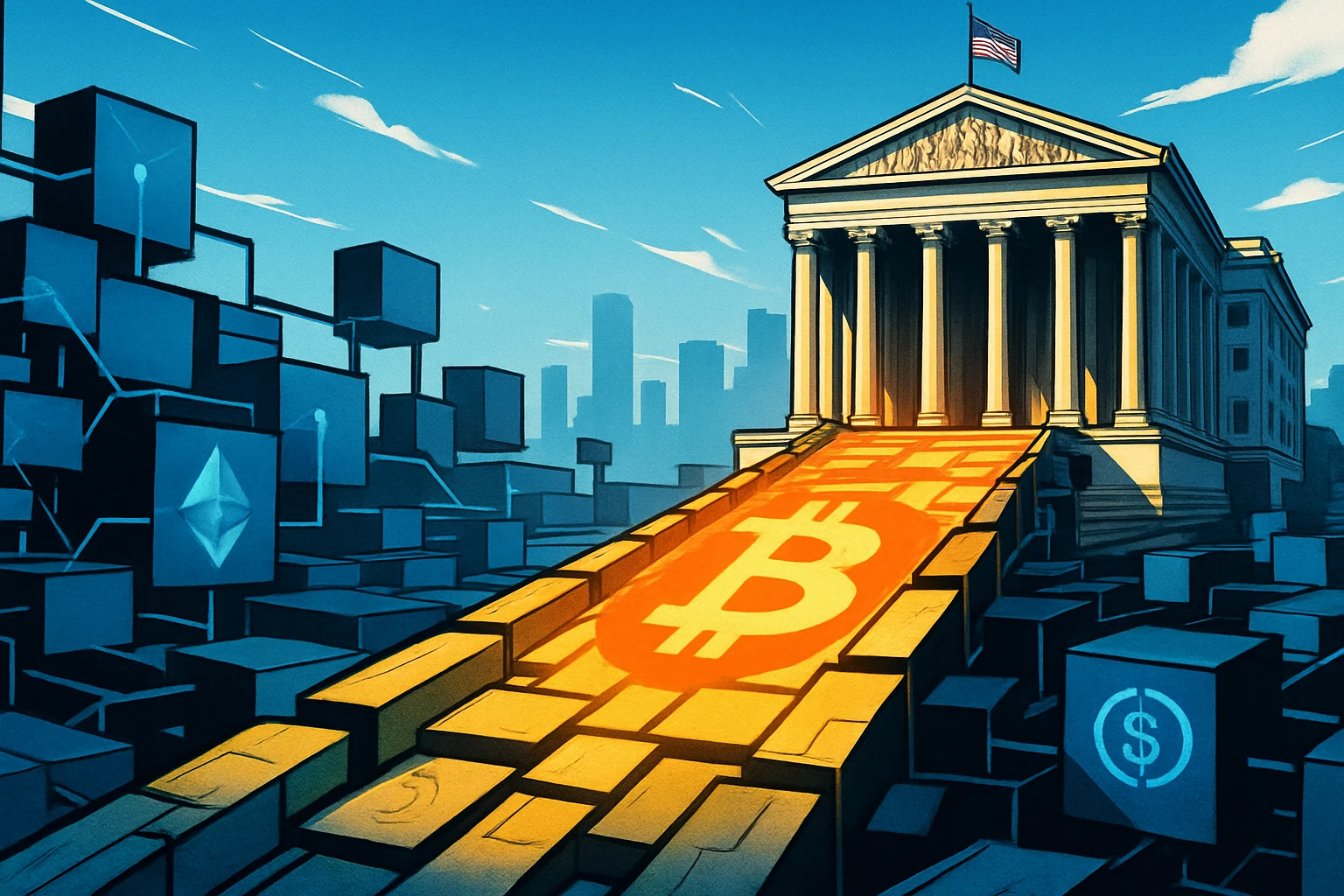
Under the Trump administration’s emphasis on “political neutrality,” Wall Street needs to recalculate risks and rewards. The OCC report is not only a reckoning with past practices, but also a rewriting of the rules of the game for the future. The door that was once closed has not been completely opened, but the gap has been pushed open by institutional forces, leaving room for the market and supervision to restore the essence of financial services.